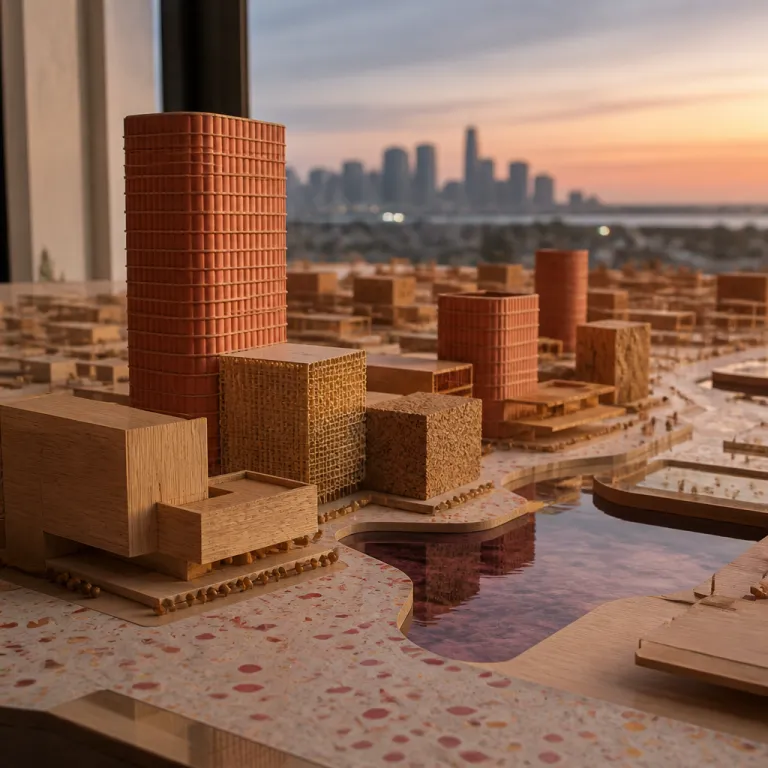
From legacy capitals to a global hotel development pipeline
For decades, the axis of London, Paris and New York defined where a design-led hotel felt inevitable. That trio still matters, yet the global hotel development pipeline and its 2026 outlook now stretch from Shanghai’s waterfront to desert valleys in Saudi Arabia and new coastal enclaves in Africa. For families planning their next luxury stay, the most interesting hotel projects are no longer confined to the familiar European and American chain strongholds.
Pipeline data from CoStar and Lodging Econometrics shows how this shift is unfolding in real time. Lodging Econometrics’ Global Construction Pipeline Trend Report for Q4 2023, for example, records more than 3,000 projects and over 580,000 rooms under development in Asia-Pacific alone, with China accounting for the majority of that volume. CoStar’s hotel analytics similarly place Shanghai among the world’s most active hotel construction markets, with tens of thousands of rooms in planning and under construction, while London and Dubai follow closely with their own ambitious room counts that keep the competition sharp. In the United States, New York still commands attention, but cities such as Phoenix and San Diego are quietly building a long-term portfolio of hotels and resorts that will open with a more experimental architectural language.
Behind the numbers sits a clear pattern that travelers can read as a design map. Lodging Econometrics has reported a slight decline in the total number of hotel projects worldwide—its 2023 year-end analysis notes a modest drop in overall project counts compared with the previous cycle—yet luxury and upper-upscale developments continue to grow as a share of the pipeline. In practical terms, that means the architecture at the top end is becoming more daring, as investors concentrate capital on fewer but more distinctive properties rather than on generic midscale supply.
For guests, that shift means fewer interchangeable rooms and more spatially ambitious hotels where the building leads the experience. The emerging global pipeline favors brands willing to commission architects who treat corridors, staircases and courtyards as narrative devices, not just circulation. When you choose where to open your next family trip, the smartest move is to follow the development pipeline and its design signals rather than relying only on the most famous chain name.
Traditional capitals still deliver, but they now compete with a broader constellation of hotel cities. London’s pipeline growth includes heritage conversions and new-build towers, while New York’s recent openings lean into adaptive reuse and skyline statements. Yet the most radical hospitality experiments are emerging in regions that once sat at the margins of global conversations about hotel architecture.
The Middle East as an architectural laboratory for families
The Middle East has become one of the clearest expressions of this global realignment in hotel development. Here, large budgets and relatively few heritage constraints allow architects to sculpt hotels directly from desert, sea and mountain landscapes. For design-conscious families, this region now offers some of the most theatrical yet carefully choreographed resorts on the planet.
Projects such as Desert Rock in Saudi Arabia’s Red Sea Project, highlighted by the Prix Versailles awards, show how a hotel can emerge almost invisibly from a mountain terrain. Designed by Oppenheim Architecture, the scheme embeds suites into existing rock formations rather than blasting them away, and Prix Versailles jurors have cited the project’s “dialogue with geology” as a model for landscape-driven hospitality. Instead of a single monolithic building, the development disperses rooms along rock faces and ravines, creating a sequence of sheltered terraces that feel both futuristic and geological. This is hospitality where the number of keys matters less than how each room frames light, shadow and silence for guests arriving from busy global hubs.
Brands like Aman and several announced NEOM hotels are using this region as a testing ground for architecture-first hospitality. Their projects sit firmly inside the luxury segment, yet the design intent is closer to land art than to a conventional chain resort. For families, that can mean suites carved into cliffs, shaded walkways that double as play spaces and pools that feel like natural wadis rather than standard hotel basins.
Hyatt and other international brands are also expanding their development pipeline across the Gulf, often through the Hyatt Regency flag and other upper-upscale brands. Recent development updates for Saudi Arabia, Qatar and the United Arab Emirates routinely specify opening years—2025 and 2026 are common targets—and list architects alongside chefs and spa directors. Each press release about a new hotel in the region now reads like a mini architecture brief, with façade strategies, structural concepts and responses to desert wind described in the same breath as wellness offerings.
For travelers comparing brands, the key is to look beyond the chain label and into the architectural drawings. Some Middle Eastern hotels will open with spectacular lobbies but conventional room layouts, while others integrate family-friendly suites into the structural concept from the start. Our analysis of when architecture outgrows the brand, explored in depth in this feature on independent design-led hotels, is especially relevant here.
As the regional pipeline reaches record highs for luxury projects, supply chain resilience has become a quiet design driver. Architects now plan for local stone, regional craftsmanship and modular construction to reduce delays, which in turn shapes the tactile experience of every room and terrace. For families, that often translates into more generous shaded outdoor spaces, thicker walls for thermal comfort and play-friendly courtyards that feel safe yet visually dramatic.
Southeast Asia’s design maturity beyond the postcard resort
Southeast Asia has long been associated with palm-fringed hotels and easy resort clichés. The current wave of projects in the regional development pipeline tells a different story, with Malaysia and Thailand producing hotels where the architecture is as rigorous as any European museum. For families, this means you can book a beach escape that also satisfies a serious appetite for design.
New projects such as Soori Penang in Malaysia and Maison Metropole in Thailand signal a shift toward more disciplined, context-driven hotel development. Soori Penang, led by architect Soo K. Chan of SCDA, uses deep overhangs, porous façades and finely calibrated courtyards to manage tropical light and monsoon rain, turning climate into a design ally rather than a threat. Instead of relying on decorative motifs, architects here are working with cross-ventilation, filtered daylight and layered thresholds that make every corridor and stairwell feel intentional.
International brands and independent resorts are both active in this development pipeline, yet they approach architecture differently. A global brand might prioritize standardized room layouts and recognizable public spaces, while a smaller property can let the site dictate irregular room shapes and unexpected family suites. For travelers, the choice is between the reassurance of a chain and the spatial surprise of a one-off hotel that treats every balcony as a viewing device.
Hyatt and other brands are selectively adding Southeast Asian projects to their global portfolios, often under the Hyatt Regency and similar flags. Lodging Econometrics’ regional breakdowns show a steady rise in upper-upscale and luxury projects across key markets such as Thailand, Vietnam and Malaysia, with many slated to open between 2024 and 2026. These hotels will open with a clear focus on family-friendly amenities, yet the most interesting ones embed those needs into the structural grid rather than adding them as décor. Think of stepped pools that double as children’s play zones, or double-height lobbies where acoustic treatment and daylighting make arrival feel calm even at peak check-in.
For guests who care about how architecture writes the guest experience, our in-depth guide to hotels where the building leads everything offers a useful lens. Apply that lens to Southeast Asia and you will see how the evolving 2026 development cycle is producing new typologies, from urban family compounds in Bangkok to low-slung coastal retreats in Penang. Each project adds another layer to a regional vocabulary built on shade, breeze and the choreography of barefoot movement between room and sea.
Africa and the rise of regionally rooted luxury hotels
Africa’s role in the global hotel story is quieter in raw numbers, yet powerful in cultural impact. New hotels in Kenya, Morocco and along the broader Indian Ocean rim show how architecture can translate local building traditions into contemporary luxury. For families, these Africa hotel openings offer a different kind of richness, one measured in texture, craft and landscape rather than only in marble and glass.
Projects such as JW Marriott’s entry into Kenya and design-forward coastal retreats influenced by African vernacular forms are reshaping expectations. JW Marriott Masai Mara Lodge, for instance, opened in 2023 with just 20 luxury tents, each oriented toward wildlife corridors rather than internal courtyards. Instead of generic towers, many developments use low-rise clusters, deep verandas and courtyards that echo village patterns while meeting international hospitality standards. This approach keeps room counts modest, but it delivers a high ratio of meaningful spaces where children can move freely between shaded gardens and water features.
Global brands, including Hyatt and other international chains, are gradually expanding their development pipeline across Africa. Lodging Econometrics’ Africa-focused reports note that while the continent’s total project count remains below that of Asia or the Americas, the proportion of luxury and upper-upscale schemes has increased over the last several reporting periods. Each new hotel announcement highlights both the number of rooms and the promise of locally inspired design, signaling that architecture has become a core part of the brand narrative. For travelers, the most interesting hotels are those where the press release talks as much about regional stone, timber and artisans as it does about spas and rooftop bars.
Lodging Econometrics data shows that while Africa’s overall pipeline growth is smaller than Asia’s, the share of luxury projects is rising. That aligns with a broader hospitality shift toward fewer but more architecturally ambitious hotels, especially in safari gateways and coastal cities. Families who read the report details carefully will notice that many of these projects are positioned as long-term investments in regional tourism, not quick speculative builds.
On the ground, that long-term mindset translates into thicker walls for passive cooling, generous overhangs for shade and landscape strategies that protect biodiversity. These design decisions make stays more comfortable for children and reduce reliance on mechanical systems, which is crucial in regions where the supply chain for imported equipment can be fragile. For a deeper look at how safety and design intersect in such contexts, our analysis of fire protection in design-led hotels explains why technical infrastructure matters as much as the view.
Reading the numbers: how travelers can use the pipeline
Pipeline statistics can feel abstract until you translate them into real choices for your next hotel stay. The global development data from CoStar and Lodging Econometrics is essentially a preview of where the most interesting hotels will open over the next several seasons. For families planning ahead, learning to read that report language is as useful as following airline route announcements.
When you see that Shanghai, London and Dubai lead in pipeline rooms, you can expect a wave of new hotels with varied architectural ambition. Lodging Econometrics’ Q4 2023 global summary, for instance, records thousands of projects in these gateway cities alone, with Shanghai and London each tracking well over 10,000 rooms in different stages of development. Some of those openings will be efficient chain properties focused on business travelers, while others will be flagship resorts designed as skyline statements or urban sanctuaries. The trick is to look for projects flagged as luxury or upper-upscale, because that is where architects are usually given more freedom to experiment with volume, light and circulation.
Lodging Econometrics notes that total United States hotel projects have dipped slightly, even as luxury developments show a clear increase year over year. Its 2023 U.S. Construction Pipeline Trend Report points to a small percentage decline in overall project numbers compared with 2022, while luxury and upper-upscale counts rose by several percentage points. That means cities like New York, Phoenix and San Diego will see fewer generic openings but a higher share of architecturally expressive hotels. For travelers, this is an invitation to be selective and to favor properties where the development narrative emphasizes design intent, not just brand proliferation.
Global brands such as Hyatt, including the Hyatt Regency flag, are carefully choosing which cities will host their most design-forward hotels. Their development documents, often shared through press releases and amplified on LinkedIn and Facebook, reveal which projects are meant as architectural statements. When a global hotel brand highlights its architect by name and references sustainability strategies or local craft, that is usually a sign that the hotel will reward design-conscious guests.
For families, the practical move is to track a few key cities where the pipeline has reached record highs for luxury projects and then plan trips around expected opening dates. Use the evolving 2026 hotel development cycle as a filter, then layer in your own needs for connecting rooms, pool access and walkable neighborhoods. In doing so, you turn abstract project lists into a personal atlas of future stays where the architecture, not just the amenity list, shapes every memory.
FAQ
How can travelers use hotel pipeline data to plan future trips?
Pipeline data from firms such as Lodging Econometrics and CoStar shows which cities have the highest number of planned hotel projects and rooms. By focusing on destinations with strong luxury pipeline growth, travelers can anticipate where architecturally ambitious hotels will open in the coming years. This helps families align long-term travel plans with the most interesting future hotel options.
Why is luxury hotel development growing while overall construction slows?
Research indicates that economic pressures and market saturation are reducing the total number of new hotel projects. At the same time, demand for premium experiences is pushing investors toward the luxury segment, where distinctive architecture can justify higher rates. This combination leads to fewer overall hotels but a greater share of design-led properties at the top end.
Which regions are leading the next wave of architectural hotels?
Current development data highlights Shanghai, London and Dubai as leaders in total pipeline rooms, with New York and Phoenix strong in the United States. The Middle East, Southeast Asia and selected parts of Africa are emerging as key regions for architecture-first hotels. Travelers seeking new design experiences should watch these markets closely for upcoming openings.
How do global brands influence architectural quality in new hotels?
Global brands such as Hyatt and other international chains bring capital, standards and marketing reach to new projects. When these brands prioritize architecture in their development pipeline, they commission stronger design teams and allow more experimentation with layouts and materials. Guests benefit through better planned rooms, more coherent public spaces and family-friendly environments that feel both functional and inspiring.
What should families look for when choosing an architecturally interesting hotel?
Families should look beyond the brand name and examine how a hotel’s architecture supports daily life, from circulation routes to outdoor play areas. Properties that integrate shade, acoustics, natural ventilation and flexible room configurations usually offer a more comfortable stay with children. Reading project descriptions, press releases and trusted reviews can reveal whether the building itself has been designed as the core of the guest experience.