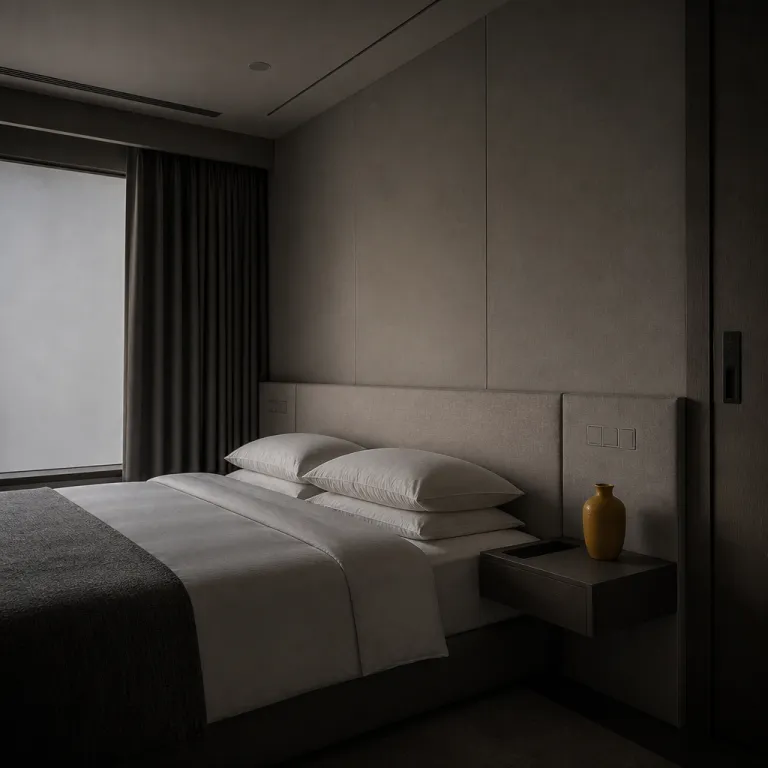
Why the most advanced smart hotel technology feels invisible
The most sophisticated smart hotel technology does not announce itself with glowing panels or blinking LEDs. It hides inside the architecture, letting the hotel room feel calm while complex systems quietly choreograph temperature, lighting and air quality. In the best hotels, the guest only notices that the stay feels unusually easy and the space unusually attuned to their rhythm.
Architectural hotels lead this shift because their primary language is design, not gadgets. For an architect driven modern hotel, visible tech can fight with the interior design, so hotel technology is embedded in walls, ceilings and furniture rather than perched on top of them. This is where ambient intelligence comes in, using networks of sensors and smart technology to read patterns of movement and light, then adjust the room without demanding the guest learn a new interface.
Industry data now backs what design led hoteliers have sensed for years. Verdant and Copeland report that IoT enabled hotel tech can improve energy efficiency by around 40 percent, which matters when you are cooling glass heavy luxury hospitality spaces in hot climates. Hospitality Net captures the operational shift clearly with the line that “experience can no longer sit on top of operations — it defines how operations are designed”, and that is exactly what invisible systems do for smart hospitality.
For travelers, the question becomes practical rather than theoretical. When you enter a smart hotel, you want technology design that respects your privacy while still delivering high guest comfort and high guest satisfaction. The most reliable sign is how little you need to touch ; if the guest room already feels at the right temperature, the circadian lighting already matches the sky outside and the front desk has already anticipated your arrival pattern, you are inside a hotel where invisible tech is doing the heavy lifting.
AI, guest data and the new choreography of arrival
Before you even reach the hotel, AI systems are already shaping your stay. Many luxury hotels now send pre arrival forms that go beyond loyalty tier and basic room preference to capture mood, intent and even energy levels for the trip. These AI driven platforms use guest data to map whether you are arriving for intense meetings, a decompression stay or a family break, then quietly adjust the guest room set up to match.
Canary Technologies and similar partners help hotels connect these signals to real world actions. A guest arriving from a red eye flight might find the hotel room already dimmed with warm lighting, the smart technology having lowered blinds and activated circadian lighting profiles to ease jet lag. For a business leisure executive extending meetings into a long weekend, the same systems can shift the space from work ready to relaxation mode, changing lighting scenes, furniture layout suggestions and even minibar contents without a single visible tech panel.
Behind this sits a careful balance between personalization and privacy. Invisible systems can only feel respectful if the hotel is transparent about how guest data is used and gives clear opt outs at booking or check in. The dataset guiding this shift is growing fast, yet Hotels.com research still shows that around 70 percent of guests prefer some human interaction, so the front desk remains crucial in explaining how smart hospitality works and why the technology is there to support, not replace, the team.
For travelers choosing between hotels, this is where guest loyalty is quietly won or lost. A modern hotel that uses AI to pre stock a meeting ready guest room, time housekeeping around your calendar and smooth late check outs will feel almost telepathic. When browsing architectural properties or planning a design focused family escape, such as a Caribbean retreat highlighted in guides to Belize resorts for families seeking architecture and nature, look for descriptions that mention AI assisted personalization and invisible systems rather than just app based controls.
Circadian lighting and rooms that move with your body clock
Lighting is where smart hotel technology invisible architecture design becomes most tangible for the traveler. Circadian lighting refers to systems that mimic the natural progression of daylight, shifting color temperature and intensity to support your internal clock. In a well tuned hotel room, you wake to soft, cool light that nudges alertness, then wind down under warmer tones that signal rest, all without touching a switch.
Canary Technologies describes smart rooms that adjust temperature and lighting based on circadian rhythms “without intrusive interfaces”, and that phrase captures the new standard for luxury hospitality. Instead of a wall of confusing buttons, sensors read occupancy and time of day, while ambient intelligence platforms coordinate blinds, fixtures and even reflections from surfaces to keep the space comfortable. The result is a guest experience where the room feels alive yet never demanding, a quiet partner in your recovery from flights and meetings.
Architectural hotels use this capability to reinforce their design intent. In coastal properties, for example, circadian lighting can be tuned to echo the Sea of Cortez sky, as seen in several resorts featured in guides to design led Sea of Cortez resorts, letting the interior design blur into the horizon line. In dense cities, a modern hotel might use indirect lighting and hidden fixtures to soften concrete or stone, with hotel technology ensuring that every guest room receives a balanced cycle even when the façade faces a narrow alley.
For you as a guest, the key is how the lighting responds to simple cues. Walk into the room at midnight and the systems should guide you with low level paths rather than harsh overhead beams, protecting both guest comfort and sleep quality. Adjust a single bedside control and the entire space should shift scene, proving that smart technology and thoughtful technology design can make even a compact 25 square metre room feel like a responsive, high performance cocoon.
Invisible systems, visible architecture: where tech stops and space begins
Architectural hotels have always been wary of visible tech cluttering carefully composed lines. When you book a stay in a property designed by a Pritzker laureate or a rising studio, you are paying for the way light hits a staircase, not for a tablet on the nightstand. That is why the most forward looking hotels now treat smart technology as a material, integrating it into walls, ceilings and furniture so that the guest experiences pure space.
The Atlas Hotel Boston is a useful reference point, with its LEED Gold, all electric energy strategy and technology integrated into Marlon Blackwell’s architecture without visible hardware. Here, hotel tech supports both sustainability and guest comfort, using IoT sensors to manage energy while keeping the guest room visually calm. Verdant and Copeland’s data on 40 percent energy efficiency gains from IoT enabled systems shows how powerful this approach can be when scaled across multiple hotels.
Invisible systems also reshape operations behind the scenes. Smart hospitality platforms connect the front desk, housekeeping and engineering, routing tasks based on real time occupancy rather than rigid schedules, which lifts operational efficiency and reduces unnecessary room entries. Hospitality Net’s observation that “experience can no longer sit on top of operations — it defines how operations are designed” plays out here, as every operational choice is filtered through its impact on guest experience and guest satisfaction.
For travelers, one way to read this is to look beyond the lobby Instagram moment. Pay attention to corridor lighting, the quiet of mechanical systems and how the room responds when you open a window or step onto a terrace. Guides such as the analysis of what peak season does to design driven properties often highlight hotels where invisible tech protects acoustic comfort and thermal stability even when occupancy is high, proving that technology design can preserve architectural intent under pressure.
How to read between the lines when booking a smart hotel
Choosing a smart hotel as a design conscious traveler means decoding language that can be vague or over enthusiastic. Many hotels now advertise smart rooms, yet the reality ranges from a single app controlled thermostat to fully integrated ambient intelligence systems. The paradox of modern hotel marketing is that the more a property talks about gadgets, the less likely the technology is to be truly invisible.
Start by looking for clues about systems rather than devices. References to IoT enabled energy management, circadian lighting, AI concierges or integrated hotel technology platforms usually signal that the hotel has invested in infrastructure, not just guest facing tech. The dataset on technological integration in hospitality shows that adoption of ambient intelligence, AI concierges and IoT for energy management is now widespread, but only a subset of hotels translate this into a coherent guest experience.
At check in, a quick conversation with the front desk can reveal a lot. Ask how the room adjusts to occupancy, whether lighting scenes are pre programmed and how your preferences are stored, which tests both the depth of smart hospitality and the hotel’s respect for guest data. Hotels.com research indicates that only around half of hotels offer tech walk throughs, yet 70 percent of guests still prefer human interaction, so a team that can explain invisible systems in plain language is a strong sign of mature hotel tech.
Once inside the room, trust your instincts. If you can operate everything intuitively, sleep well, feel thermally comfortable and move through the space without hunting for switches, the technology design is working. Over time, these experiences build guest loyalty, as travelers return to hotels where luxury feels like effortlessness, and where the smartest systems are the ones they never had to notice.
FAQ
What is invisible hotel technology in practice ?
Invisible hotel technology refers to systems that operate in the background without demanding your attention. Sensors, AI platforms and IoT devices manage lighting, temperature and access so that the room simply feels comfortable and responsive. You benefit from higher guest comfort and efficiency without facing complex control panels.
How do smart rooms enhance guest experience without feeling intrusive ?
Smart rooms use ambient intelligence to read patterns such as occupancy, time of day and sometimes pre arrival preferences. The systems then adjust circadian lighting, climate and even service timing automatically, so the guest experience improves while visible tech remains minimal. When done well, you only notice that the stay feels smoother and more tailored.
Are guests generally comfortable with high tech hotel rooms ?
Many travelers appreciate the convenience of smart technology when it is easy to use and clearly explained. Survey data shows that a significant share of guests still value human interaction, so the front desk and concierge remain essential in guiding people through features. Comfort rises when hotels are transparent about guest data use and offer simple opt out choices.
How can I tell if a hotel’s tech is more than just a gimmick ?
Look for signs that systems are integrated rather than isolated gadgets. References to energy management, AI assisted personalization and circadian lighting usually indicate deeper hotel technology investments than a single app or voice assistant. During your stay, seamless comfort and intuitive controls are better indicators than flashy devices.
Do invisible systems really improve sustainability in luxury hotels ?
IoT enabled platforms can significantly reduce unnecessary heating, cooling and lighting by responding to real time occupancy. Studies from providers such as Verdant and Copeland suggest energy savings of around 40 percent when these systems are fully deployed. For guests, this means a more sustainable stay without sacrificing comfort or luxury.