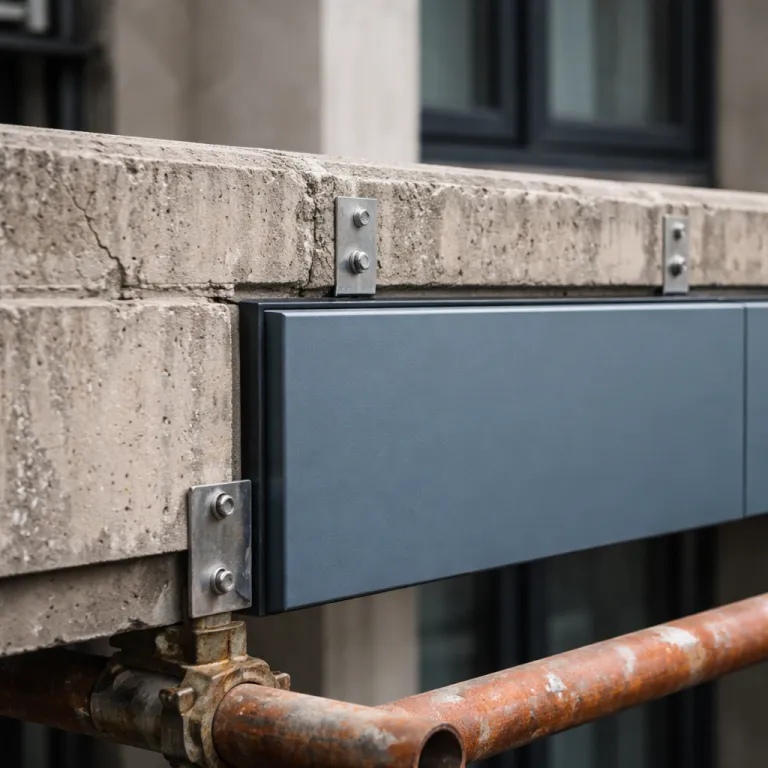
Why the hotel renovation boom in the US is redefining architecture
The hotel renovation boom reshaping the US hospitality market through 2026 is no longer a niche topic for developers. A record wave of renovation projects across the United States is shifting the balance away from ground up hotel construction and toward adaptive reuse, interior reinvention and precise structural upgrades that respect existing bones. For design focused guests, this means that the most interesting hotels and resorts are often those where the architect worked with constraints rather than a blank site.
Lodging Econometrics data shows more than 6,000 hotel development projects in the national construction pipeline at the start of 2024, with 2,118 of those focused on renovation and brand conversion across every hospitality segment (Lodging Econometrics, U.S. Construction Pipeline Trend Report, Q1 2024). Because renovation and conversion counts have risen in consecutive quarterly reports since 2022, analysts now frame this as a multi year cycle that will shape the market into 2026. In the luxury tier alone, 102 projects signal that the hotel industry is betting on architectural character and sustainability as key drivers of long term growth, even as economic uncertainty and higher interest rates complicate new construction projects in several markets. As the Lodging Econometrics commentary on the Q1 2024 report puts it with clarity, “What is driving the hotel renovation boom in 2026? Aging infrastructure and evolving guest expectations.”
For travelers planning a stay, the implications are immediate and very tangible. Renovated hotels in major markets such as New York, Phoenix and Los Angeles are adding rooms through smart reconfiguration rather than expansion, which often preserves façades, intricate brickwork and courtyard living spaces that a new build might erase. The most thoughtful management companies now brief architects to foreground natural textures, daylight and circulation so that guests feel the architecture in the corridor, not just in the lobby Instagram moment.
Behind the scenes, the construction pipeline is being reshaped by both economics and environmental responsibility. Adaptive reuse typically reduces construction costs by 15–30 percent and can cut embodied carbon by 40–60 percent compared with demolish and rebuild strategies, which is why many developers and real estate funds now treat renovation as their default hotel development path. In this context, the current wave of US hotel upgrades is as much about carbon and community as it is about marble and thread count.
Key players are already leaving a visible mark on the hospitality landscape. Brookfield Properties, for example, has taken the lead on complex renovation projects such as Le Méridien Dallas, The Stoneleigh, where a multi year restoration completed in 2018 combined structural repairs, refreshed guest rooms and a reimagined lobby while preserving the 1920s Art Deco façade. Rockwell Group is reworking the W New York – Union Square, a landmark conversion announced in 2019 and now moving through phased construction, to align global brand standards with a very specific urban fabric. Antinozzi Associates, acting as architect of record for The Post in Southport, Connecticut, shows how regional practices can translate large scale construction projects into intimate guest experiences that still feel rooted in place. As one architect on a recent conversion project put it, “Our job is to let the building’s history do the talking, and then tune the interiors so today’s guests can actually hear it.”
From brand conversions to extended stay: how design choices shape your experience
The most striking renovation stories in the current US hotel cycle sit in the grey zone between heritage and brand template. Brand conversions now dominate many urban construction projects, where existing hotels or office buildings shift into new hospitality flags without losing their structural identity. For guests, the question is whether the conversion respects the original rhythm of the rooms and public spaces or flattens everything into a generic standard.
Design teams working on these projects face a delicate brief that goes far beyond surface finishes. They must align global hospitality requirements for safety, accessibility and technology with local expectations about character, which is why adaptive reuse often relies on digital design software, sustainable materials and energy efficient systems to unlock difficult floorplates. When done well, as in many recent hotel and resort conversions, the result is a stay where the grain of the stair, the thickness of the wall and the way light moves through a courtyard become as memorable as the service itself.
Extended stay formats are also being pulled into this renovation wave. Instead of building new extended stay blocks on the edge of town, developers increasingly convert existing hotels or residential real estate into flexible suites with kitchenettes and generous work zones, which responds directly to demand from business leisure travelers stretching a two night meeting into a five night working holiday. For an executive who values architecture, these extended stay renovations can offer a more residential spatial logic, with layered thresholds and quieter acoustic performance than many new build resorts.
Global data from CoStar shows that while cities such as Shanghai, London and Dubai lead in pure hotel openings by room count, the United States is catching up through a different route, leaning on renovation led growth rather than only on new hotel construction (CoStar, Global Hotel Construction Pipeline, 2024). CoStar’s analysis notes that conversion and renovation projects in the US now represent a growing share of total pipeline activity, particularly in gateway markets where land is scarce and construction costs are volatile, pushing developers toward conversions that can be delivered faster and with less risk. The renovation focused pattern therefore reflects a strategic choice by management companies and their vice president level decision makers, who know that well executed upgrades will continue to perform across cycles.
For travelers who collect architecturally significant stays, this shift changes how you research and book. A new build may still impress with scale, but a carefully reworked grande dame or a converted office tower often offers richer spatial narratives, especially when courtyard living spaces and natural textures are retained. When planning a design led itinerary that spans both city and sea, you might pair a reimagined American landmark with a Cycladic masterclass such as the Four Seasons Resort and Residences Mykonos K Studios project, a reference point for how hotels and resorts can express local architecture without slipping into pastiche.
What the renovation wave means for your next architectural stay
For the traveler, the current renovation movement in US hospitality is not an abstract industry story; it directly shapes how you will feel in the space from check in to checkout. Renovated hotels across the United States increasingly foreground courtyard living, intricate brickwork and tactile materials, which means that your chosen room is more likely to open onto a layered sequence of thresholds rather than a single loaded corridor. This is especially true in historic districts, where developers work with preservation boards to keep street facing façades intact while reconfiguring interiors for contemporary hospitality demand.
Data from Lodging Econometrics indicates that renovation and conversion projects now span every price point, but the most ambitious work is clustered in the upper upscale and luxury tiers where guests are willing to pay for design integrity. In these segments, the construction pipeline is dominated by hotel development schemes that treat adaptive reuse as both an environmental and experiential advantage, rather than a compromise forced by economic uncertainty or high interest rates. For business leisure travelers, that translates into stays where the architecture feels intentional, whether you are in a 40 square metre corner room in Los Angeles or a compact 22 square metre city view category in New York.
Environmental arguments around hotel construction are also becoming more visible in guest facing narratives. Adaptive reuse typically preserves existing structures, which reduces demolition waste by up to 80 percent and shortens the construction project timeline by several months, while energy efficient systems cut operational emissions over the long term. When you read a sustainability section or development update on a hotel website, look for specific references to structural upgrades, façade retention and mechanical retrofits rather than vague green language.
For design conscious travelers, a few practical habits can help you navigate this renovation heavy landscape. Always check whether a hotel is mid renovation before you book, ask directly about which rooms sit in the newly completed wings and which still reflect older layouts, and inquire about courtyard access or quiet side streets if you value acoustic calm. When researching architectural stays in secondary markets, resources such as a refined guide to a historic United States hotel in Jacksonville, Oregon can offer a useful benchmark for how smaller properties handle construction and development constraints.
The boom also blurs boundaries between land based hotels and other forms of architectural hospitality. High net worth guests now move fluidly between reimagined city hotels, coastal resorts and yacht based stays, expecting the same level of spatial intention and material quality in each environment. Projects such as the Dix Bay inspired approach to the art of architectural yacht stays for discerning travelers show how hospitality design thinking migrates across typologies, reinforcing the idea that the hotel industry will continue to be judged not only on service, but on how intelligently it reuses and reinterprets existing structures.